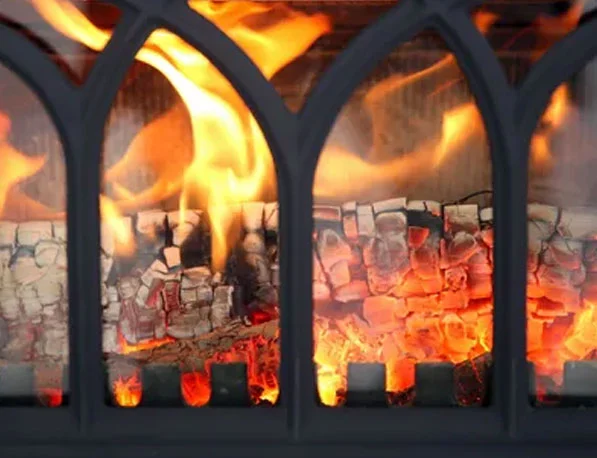
Has your chimney or fireplace been unused for years? Is it safe to light again?
Buying or renovating an older property often comes with surprises. One of the most common is discovering a fireplace or chimney that hasn’t been used for years.
Across Amersham and Chesham, we regularly visit properties where new owners have inherited an open fireplace, an old stove or a chimney they know very little about.
Chimney Power Sweeping Ltd is HETAS Approved, NVQ Level 2 qualified, fully insured and a member of the Guild of Master Chimney Sweeps. Our experienced team helps homeowners understand the condition of their chimney before they decide what to do next.
Sometimes homeowners want to bring the original fireplace back into use. Others are considering installing a wood-burning stove. Some are renovating completely and want to remove the chimney breast to gain more space.
The important thing is not to assume that an old chimney is either ready to use or no longer relevant simply because you don’t intend to use it.
At Chimney Power Sweeping Ltd, our approach is to first understand what the homeowner wants to achieve. We then establish the condition of the existing chimney and fireplace before explaining the practical options.
I’ve Found an Old Fireplace – Can I Just Light It?
If you don’t know when a chimney was last used or swept, we wouldn’t recommend simply building a fire to see what happens.
Even if the fireplace looks perfectly good from the room, you don’t know the condition of the flue above it.
A long-unused chimney may contain soot, debris, birds’ nests or other blockages. There could also be damage to the flue, chimney liner or surrounding structure.
For a chimney that’s been unused for a long period, our starting point would normally be to sweep and check the chimney before it’s brought back into use.
Depending on what we find and the customer’s plans, further checks may be appropriate. These can include smoke testing, ventilation checks or an internal CCTV inspection.
The aim isn’t to assume there’s a problem. It’s to establish what you’ve actually inherited before you start using it.
Just Moved In? Our Home Starter Package Is Designed for This
This is exactly the type of situation our Home Starter Package was created for.
When someone moves into a property with a fireplace or wood-burning stove, there’s often no handover from the previous owner.
You might not know when it was last swept, what fuel was burned, how the appliance works or even whether the chimney has been regularly maintained.
For customers who haven’t had a real fire before, there’s another consideration: how do you actually use it correctly?
As well as checking the fireplace and chimney, we can explain things such as:
- What fuel you should and shouldn’t burn
- How to light the fire correctly
- How to establish a good chimney draw
- How to use a wood-burning stove’s air controls
- How to burn efficiently rather than letting a fire smoulder
- Basic maintenance and what to look out for
- Carbon monoxide safety
- How often your chimney should be swept and your stove serviced
Every home with a working fireplace or stove must have a working carbon monoxide alarm as an essential safety measure. It should be installed correctly, tested regularly and maintained according to the manufacturer’s instructions.
Rather than simply leaving you with a certificate, the idea is that you understand what you have and how to use it safely and correctly.

Do You Want to Keep the Original Fireplace?
This is an important question, particularly when renovating an older property in Amersham or Chesham.
Some homeowners love the character of an original fireplace and don’t want to replace it with something modern.
That’s absolutely fine.
If retaining the appearance of the fireplace is important, we’ll look at what is required to bring the existing setup back into use.
Older fireplace surrounds can sometimes have deteriorated seals or gaps that need attention. Depending on the condition, repairs and resealing may be possible while retaining the appearance and character of the original fireplace.
For us, it’s about finding out what the customer wants rather than automatically suggesting everything should be replaced.

Or Would a Wood-Burning Stove Be a Better Option?
If you’re already renovating the room, it’s also a good opportunity to consider whether you actually want an open fire.
There’s a huge difference between having a fireplace primarily for its appearance and wanting it to provide useful heat.
Traditional open fires can lose a substantial amount of the heat they produce through the chimney. A modern, correctly installed wood-burning stove is considerably more efficient at transferring heat into the room.
That can mean more usable heat from the fuel you’re burning and less wood required to achieve it.
For some homeowners, keeping the traditional open fireplace is absolutely the right choice.
For others, particularly those intending to use the fire regularly, installing a stove can make much more sense.
What’s More Important – The Look or the Heat?
This is one of the conversations we have with customers when they’re renovating.
Do you love the appearance and character of the existing open fireplace?
Or:
Do you want to get as much useful heat as possible from it?
There’s no universal right answer.
We consider the property, chimney, room, how regularly you intend to use it, what you’re trying to achieve and, of course, your budget.
We can then explain the different options so you can decide what’s practical for your particular home.
Removing a Chimney Breast During a Renovation?
There’s another option that’s becoming increasingly common.
Some homeowners don’t want a fireplace at all.
Instead, they want to remove the chimney breast to create additional floor space or achieve a cleaner, more modern room layout.
That’s perfectly possible when carried out correctly, with the appropriate structural and building-control considerations. However, there’s one part of the job that’s easily forgotten:
What happens to the chimney that’s left above it?
Removing the chimney breast from one room doesn’t necessarily mean the entire chimney has disappeared.
Depending on the layout of the property and extent of the work, you could still have a section of redundant chimney running from an upper floor or loft all the way to the chimney pot.
That could mean several metres of unused flue remaining inside the property.
Have the Chimney Swept Before It’s Closed Off
If you’re permanently taking a fireplace or section of chimney out of use, our recommendation is to deal with the old flue properly before the renovation closes everything up.
Having the chimney swept first removes old soot and deposits while there is still access to the flue.
We can then advise on how the remaining chimney should be dealt with.
Simply removing the fireplace downstairs and forgetting about everything above it can potentially leave a redundant section of chimney that is still exposed to whatever enters through the chimney pot.
Sweeping before closing the structure also gives you an opportunity to identify problems early. This is often easier and less disruptive before plastering, decorating and flooring are complete.
An Unused Chimney Still Needs Protection
This is something homeowners don’t always realise.
A chimney doesn’t stop being a chimney just because you’ve stopped using it.
If an open chimney pot remains at roof level, rain, snow and debris can still enter.
Birds may also see an unused chimney as an ideal nesting location. Nests can restrict airflow and may create problems if the chimney is brought back into use later.
An incorrectly sealed redundant chimney can also create ventilation and moisture concerns. Trapped moisture and condensation may contribute to damp problems within the chimney structure.
That’s why we regularly recommend fitting an appropriate chimney cap or ventilated cowl to redundant chimneys.
The aim is to prevent unwanted things getting in while allowing the remaining chimney to breathe appropriately.
It’s a relatively simple consideration during a renovation that can help prevent much more frustrating problems later.
What About a Bioethanol Stove Instead?
Not everyone renovating an older property wants a traditional open fire or wood-burning stove.
Another option is a bioethanol fire or stove-style appliance.
Some modern versions have the appearance of a traditional stove and can create an attractive focal point without requiring the existing chimney to operate in the same way as a conventional solid-fuel appliance.
For certain rooms and homeowners, that can be an option worth considering.
However, choosing an appliance that doesn’t require the old chimney doesn’t mean the chimney itself should simply be ignored.
If the existing chimney is becoming redundant, we’d still recommend considering having it swept and then appropriately capped, protected and ventilated.
Renovating in Amersham or Chesham? Think About the Chimney Early
One of the best pieces of advice we can give anyone renovating an older property is to make decisions about the chimney and fireplace before the room is finished.
It’s much easier to sweep, inspect, repair, modify or prepare a chimney while renovation work is taking place than after the room has been plastered, decorated and furnished.
If you’ve uncovered an old fireplace, don’t automatically remove it. Equally, don’t assume you have to keep it.
Find out what you’ve got first.
You may decide to:
- Restore and continue using the original open fireplace
- Repair and reseal an existing fireplace
- Install a modern wood-burning stove
- Remove the chimney breast to create additional space
- Choose an alternative such as a bioethanol appliance
- Retire the fireplace completely and correctly protect the redundant chimney
The right answer depends on your property and what you want from it.
Chimney Sweeping, Inspections & Stove Advice in Amersham and Chesham
At Chimney Power Sweeping Ltd, we work throughout Amersham and Chesham, helping homeowners understand existing chimneys and fireplaces as well as maintain, repair and upgrade them.
Our services include:
- Professional chimney sweeping
- Home Starter Packages for new homeowners
- Internal CCTV chimney inspections
- Smoke and chimney testing
- Wood-burning stove servicing
- Chimney cowls and caps
- Bird nest and blockage removal
- Drone roof and chimney inspections
- Flue liner installation
- HETAS-approved wood-burning stove installation
We’re HETAS Approved, NVQ Level 2 qualified, members of the Guild of Master Chimney Sweeps and fully insured.
Our clean, mess-free approach helps minimise disruption inside your home. We use specialist dust-control equipment and take care to protect surrounding furnishings and surfaces.
Whether you’re a homeowner, landlord or property renovator, we can help you understand the condition of your chimney and choose the next practical step.
Bought an Older Home With an Unused Fireplace? Start With the Chimney
If you’ve recently moved into or are renovating a property in Amersham or Chesham and there’s a fireplace or chimney that hasn’t been used for years, don’t feel that you need to decide immediately whether to keep it, replace it or remove it.
Start by finding out what you’ve actually got.
Once the chimney and fireplace have been checked, we can talk you through the options and help you decide what makes sense for the property, your budget and how you want to use the room.
Sometimes the best option is bringing a beautiful old fireplace back to life.
Sometimes it’s installing a more efficient wood-burning stove.
And sometimes it’s removing the fireplace completely, but making sure the chimney that’s left behind is dealt with properly.
Whatever you decide, doing it correctly during the renovation can save a lot of problems later.
Need Advice About an Old Fireplace or Chimney in Amersham or Chesham?
Contact Chimney Power Sweeping Ltd today to arrange a chimney sweep, Home Starter Package, chimney inspection or to discuss the options for an existing fireplace or wood-burning stove.
We’ll help you understand what you have first, and then decide what to do with it.
Email: cpsweeping@outlook.com
Call us today for a free quote and reliable advice 07547 083293
Company Number: 14770472